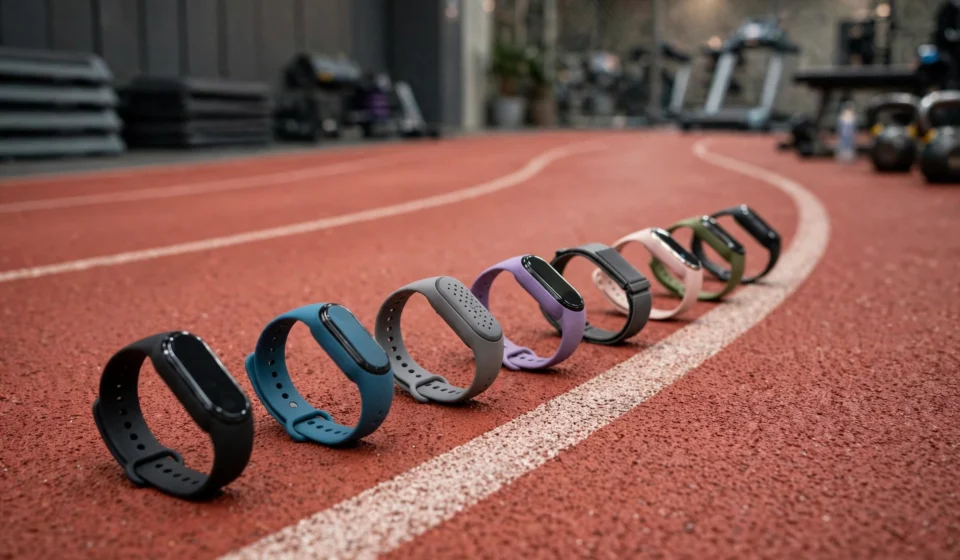

Smartwatches get the headlines, but for pure fitness tracking a dedicated band is still hard to beat. It is lighter, cheaper, lasts a week or more on a charge, and never nags you about app notifications mid-workout. The best fitness trackers 2026 come in two flavors: slim bands that quietly log your days and nights, and screenless recovery trackers that coach you like a personal trainer.
We have sorted through the current lineup — Fitbit, Garmin, Xiaomi, Whoop, Amazfit and Samsung — to find the trackers worth wearing this year. Whether you want the most accurate heart-rate data, the longest battery life, or the best value under fifty bucks, there is a pick here for you.
How to choose among the best fitness trackers 2026
Accuracy first. A tracker’s job is trustworthy data. Wrist heart-rate accuracy varies between brands, and reviewers consistently rank Garmin and Fitbit’s latest sensors among the strongest. If you train by heart-rate zones, this matters more than any other spec.
Battery life is the whole point of a band. A tracker that needs charging every night is just a smartwatch with fewer features. The best bands go a week or more; the budget kings stretch past two.
Watch the subscription trap. Some trackers are cheap upfront but lock your best insights — readiness scores, detailed sleep analysis — behind a monthly fee. Factor the subscription into the true cost before you buy.
GPS: built-in or phone-powered? Built-in GPS maps your runs without your phone. Phone-powered GPS is fine if you always run with your phone anyway, but it is a dealbreaker if you want to leave it behind.
The best fitness trackers 2026: our top picks
Fitbit Charge 6 — best overall fitness tracker
The Fitbit Charge 6 remains the band to beat. It packs built-in GPS, a color AMOLED touchscreen, ECG and EDA stress sensing, and what reviewers report as Fitbit’s most accurate heart-rate sensor to date. Battery life is rated at up to 7 days.
It lists at $159 but is frequently discounted toward $119 or lower, which makes it a genuinely strong value. The Fitbit app is one of the cleanest health apps around, with Daily Readiness and detailed sleep scores. Optional Fitbit Premium ($9.99/month) unlocks deeper insights, but the free tier covers the essentials well.
For most people — beginners and steady exercisers alike — this is the safest recommendation in fitness tracking. Learn more about the lineup on Fitbit’s official site.
Garmin Vivosmart 5 — best for training data, no subscription
The Garmin Vivosmart 5 trades a flashy screen for comfort and depth. Its small OLED display keeps the band slim and unobtrusive, while Garmin’s training metrics — Body Battery energy scores, sleep tracking, stress monitoring — come free with no subscription.
It lists at $149.99 with up to 7 days of battery, and it uses your phone’s GPS for route tracking. Reviewers praise its steady, dependable data over time rather than gimmicks. If you want a tracker that vanishes on your wrist and never asks for a monthly fee, this is it.
Xiaomi Smart Band 10 — best budget fitness tracker
Nothing near this price does this much. The Xiaomi Smart Band 10 offers a crisp 1.72-inch AMOLED display, around 150 sport modes, and a rated battery life of up to 21 days — real-world use with the always-on display lands closer to 9 days, which is still excellent. It typically sells for around $53–$70.
The compromises are real: no built-in GPS (it borrows your phone’s), and sleep tracking is weaker than Fitbit’s or Garmin’s. But as a first tracker, a gift, or a no-risk way to start tracking, it is unbeatable value. Xiaomi’s companion app is free with no subscription.
Whoop — best for recovery and strain coaching
Whoop takes a different approach: no screen at all. The band quietly collects heart-rate, HRV, sleep and strain data around the clock, and the app turns it into recovery and sleep coaching that feels like having a trainer in your pocket.
The catch is the business model. The hardware is effectively bundled with a membership — around $30/month for the latest generation — so it is the priciest option here over a year. But for athletes and serious trainers who live by recovery scores and want the deepest strain analysis in a band form factor, nothing else coaches quite like it.
Amazfit Active 2 — best watch-style tracker value
If you would rather have a watch shape than a slim band, the Amazfit Active 2 is the value pick. It offers a bright AMOLED display, built-in GPS, and up to 10 days of battery (around 19 in saver mode), listing at roughly $99–$129 depending on the version.
Amazfit’s app is free with no subscription, and the watch covers the fundamentals — heart rate, SpO2, sleep, stress — plus solid workout tracking. It will not match Garmin’s training depth, but for runners who want onboard GPS without the premium price, it is a smart buy.
Samsung Galaxy Fit3 — best for Samsung phone owners
The Galaxy Fit3 is the quiet achiever of this list: a large AMOLED display, up to 13 days of battery, and a price that sits comfortably under $100. It pairs best with Samsung phones, where it slots into the Samsung Health ecosystem seamlessly.
There is no built-in GPS — it uses connected GPS from your phone — so runners who go phone-free should look at the Charge 6 or Amazfit Active 2 instead. But for everyday activity and sleep tracking on a Samsung phone, the battery life alone makes it compelling.
Fitness tracker comparison at a glance
| Tracker | Best for | GPS | Rated battery | Subscription |
| Fitbit Charge 6 | Most people | Built-in | Up to 7 days | Optional $9.99/mo |
| Garmin Vivosmart 5 | Training data | Phone | Up to 7 days | None |
| Xiaomi Smart Band 10 | Budget | Phone | Up to 21 days | None |
| Whoop | Recovery coaching | No | ~5 days | ~$30/mo |
| Amazfit Active 2 | Watch-style value | Built-in | Up to 10 days | None |
| Samsung Galaxy Fit3 | Samsung owners | Phone | Up to 13 days | None |
Battery figures are manufacturer ratings; real-world results vary with always-on display and GPS use.
Fitness tracker vs smartwatch: which should you buy?
A fitness tracker is lighter, cheaper and lasts a week or more, focusing on activity, sleep and health. A smartwatch adds apps, contactless payments and calls — but usually needs charging every day or two and costs significantly more.
Choose a tracker if fitness data and battery life are your priorities. Choose a smartwatch if you want a wrist computer that also tracks workouts. If you are leaning toward the full smartwatch experience, see our roundup of the best smartwatches 2026 for the top picks there.
Buying tips before you strap one on
Try the band on if you can. A tracker you wear 24/7 — including sleep — needs to be comfortable. Slim bands like the Vivosmart 5 disappear; bulkier watch-style trackers can annoy light sleepers.
Check app compatibility. All the picks here work with both iPhone and Android, but some features (like the Galaxy Fit3’s deepest Samsung Health integration) favor one platform.
Do not pay for features you will not use. ECG, EDA stress sensing and skin-temperature tracking sound impressive, but if you just want steps, sleep and workouts, a budget band covers it.
Replace the strap, not the tracker. Most bands support cheap third-party straps. A fresh strap can make a two-year-old tracker feel new — and comfortable straps get worn more, which means better data.
Frequently asked questions
What is the best fitness tracker in 2026?
For most people, the Fitbit Charge 6 — it combines built-in GPS, strong heart-rate accuracy and a polished app at a frequently discounted price. Data-focused athletes who hate subscriptions should consider the Garmin Vivosmart 5, and budget buyers cannot go wrong with the Xiaomi Smart Band 10.
Are fitness trackers accurate?
Modern trackers are impressively accurate for step counting and resting heart rate. Wrist heart-rate accuracy during intense exercise varies; reviewers generally rate Garmin and Fitbit’s latest sensors among the best. For medical-grade precision, a chest strap still wins.
Do I need a subscription for a fitness tracker?
Not necessarily. Garmin, Xiaomi, Amazfit and Samsung offer their full core experience free. Fitbit reserves some deeper insights for its optional Premium tier. Whoop is the exception — its membership is the product, and the band is effectively bundled with it.
How long do fitness tracker batteries really last?
Manufacturer ratings assume conservative settings. With always-on displays and regular GPS workouts, expect roughly half the rated figure on most bands. Even so, a week between charges is realistic for the Charge 6 and Vivosmart 5, and the Xiaomi band stretches further.
Can a fitness tracker replace my smartwatch?
It depends on what you use the watch for. If you mainly want activity, sleep and health tracking with long battery life, yes. If you rely on apps, notifications, calls or contactless payments from your wrist, a smartwatch still does more.
Which fitness tracker is best for sleep tracking?
The Fitbit Charge 6 and Garmin Vivosmart 5 both offer detailed sleep stages and scores, with Fitbit’s sleep analysis often praised as the most readable. Screenless options like Whoop focus heavily on sleep and recovery coaching for athletes.