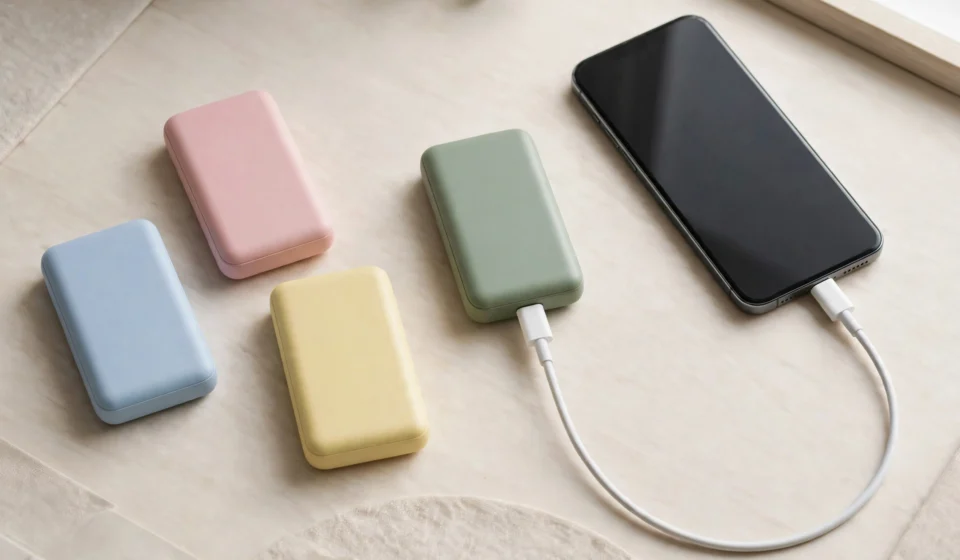

A dead phone halfway through the day is one of modern life’s small disasters, and the fix is simple: a pocket power bank that actually keeps up with your devices. The best power banks 2026 are faster, smarter and more compact than the bricks of a few years ago, with USB-C Power Delivery now the standard on everything from budget models to laptop-grade monsters. Whether you need a slim backup for your phone, a magnetic charger that snaps to the back of your iPhone, or a high-wattage bank that can refill a laptop, this guide rounds up the standout options and shows you exactly what to check before you buy.
Note that this guide is strictly about pocket and portable phone chargers. The much larger battery units designed for camping, home backup and off-grid use — portable power stations — are a different category altogether.
The Best Power Banks 2026 at a Glance
Before the model-by-model rundown, here is how capacity and wattage break down in practice. Capacity is measured in milliamp-hours (mAh), while the energy content airlines care about is measured in watt-hours (Wh). A typical 10,000mAh power bank holds roughly 37Wh of energy.
Capacity Tiers: What 10,000mAh and 20,000mAh Really Give You
Capacity is only half the story, because voltage conversion and heat eat some of the advertised energy before it ever reaches your phone. Still, as a rule of thumb, a 10,000mAh bank delivers roughly two full charges for most modern flagship phones, while a 20,000mAh bank doubles that and can also refill tablets, earbuds and smartwatches several times over. If your phone spends the whole day running maps, camera and mobile data, the 20,000mAh tier is the sweet spot for a full day away from an outlet. Step up to 25,000–27,000mAh and you are in laptop-charging territory, with enough reserve to top up a phone, tablet and earbuds together.
USB-C PD Wattage: Match the Charger to Your Device
USB-C Power Delivery (PD) is the fast-charging standard that matters in 2026. A phone typically draws between 18W and 45W, a tablet between 30W and 65W, and a laptop anywhere from 65W up to 140W or more. Reviewers report that pairing a high-wattage bank with a phone is perfectly safe — the phone only draws what it needs — but pairing a low-wattage bank with a laptop means it will charge slowly or merely hold its charge. Check the single-port maximum output, not just the total: some banks advertise a big combined number that no single port can deliver on its own.
The 100Wh Airline Limit Explained
Lithium batteries on passenger aircraft are regulated by energy content, not by mAh. Under widely reported IATA and FAA rules, power banks rated at 100Wh or less can be carried in hand luggage without prior airline approval, while units between 100Wh and 160Wh generally need the airline’s permission, and anything above that is typically forbidden. According to manufacturer listings, most pocket power banks — including the 20,000mAh and even many 25,000mAh models at around 90Wh — fall comfortably under the 100Wh limit. Always check the Wh rating printed on the bank itself before flying, and pack power banks in carry-on baggage only.
MagSafe and Qi2 Wireless Options
Magnetic wireless charging has matured into a genuinely convenient option. Qi2-certified magnetic banks snap onto the back of compatible iPhones and Qi2 Android phones, delivering up to 15W of wireless power according to the Qi2 specification, with no cable to fumble with. Wireless charging is less efficient than wired, so these banks are best as top-up companions rather than primary chargers, but for everyday carry the convenience is hard to beat.
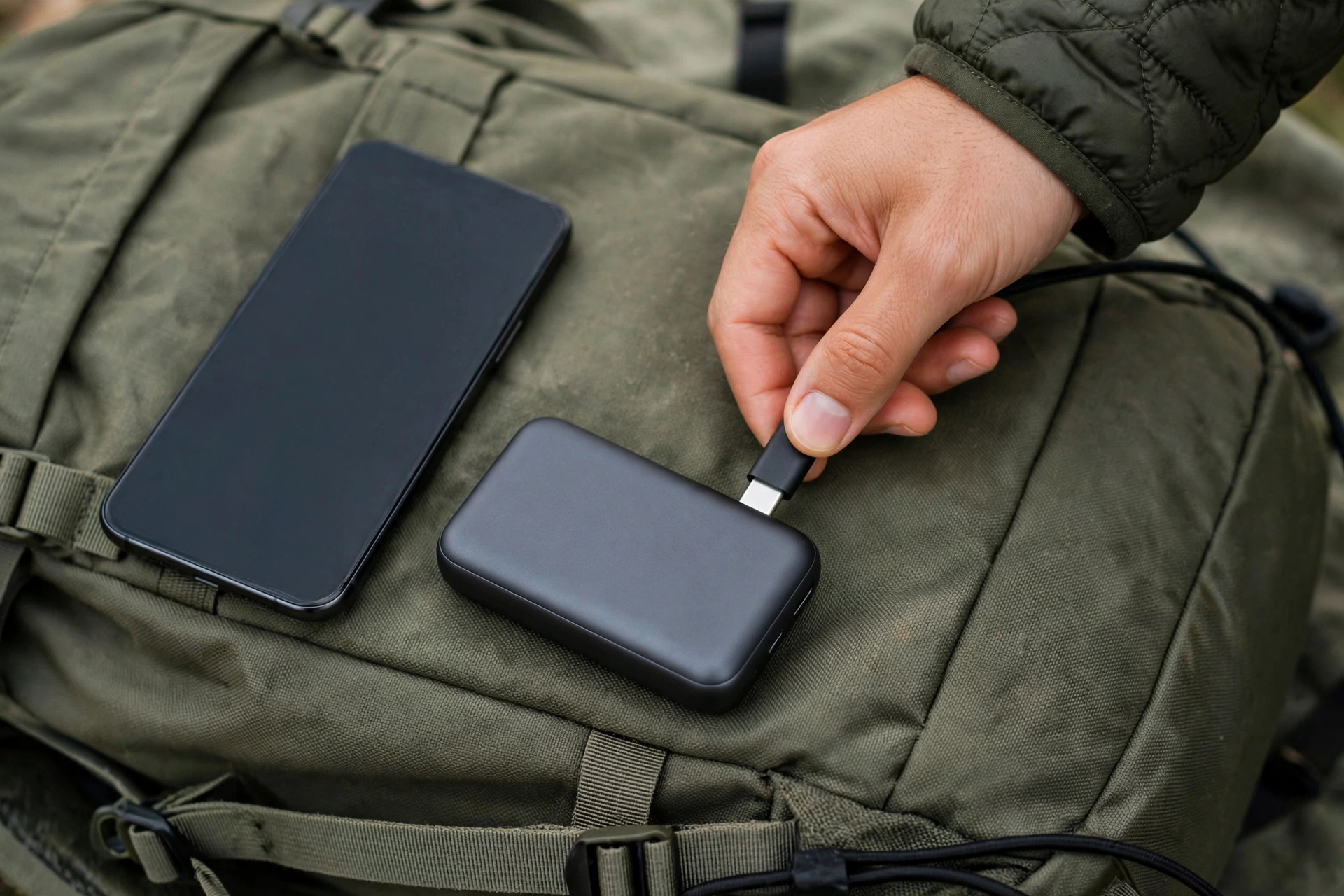
6 of the Best Power Banks 2026 Worth Considering
Anker Prime Power Bank (26K, 300W) — Best for Power Users
Anker’s flagship sits at the top of the 2026 power bank ladder. According to the manufacturer’s official product page, the Prime Power Bank delivers 300W of total output with USB PD 3.1 support, a smart digital display showing live input and output wattage, bi-directional fast charging, and ActiveShield temperature monitoring. Reviewers report that its single USB-C port can push up to 140W, enough to fast-charge a 16-inch laptop at full speed while other ports handle a phone and earbuds. You can browse the current range on the official Anker power bank collection page. It is heavier than a phone charger, but for anyone who travels with a laptop it is the bank other banks are measured against.
UGREEN Nexode 25,000mAh 200W — Best High-Wattage All-Rounder
UGREEN’s Nexode is the value play in the laptop-grade class. UGREEN’s official EU product page lists a 25,000mAh (90Wh) capacity, 200W total output, a TFT smart display showing voltage, current and power flow, and a primary USB-C port rated up to 140W under PD 3.1. At 90Wh it stays under the airline carry-on threshold, and according to reviewers it recharges itself in around two hours from a 65W wall charger. If the Anker Prime is the headline act, the Nexode is the pragmatic pick for travelers who want near-flagship wattage without the flagship price tag.
Baseus Blade HD 20,000mAh 100W — Best Slim Laptop Bank
The Baseus Blade is famous for one thing: it is extraordinarily thin for a 100W bank. According to reviewers who pulled specifications from the official listings, it packs 20,000mAh (around 74Wh) with 100W total output across two USB-C and two USB-A ports, weighs roughly 445g, and slips into a laptop sleeve or slim bag where chunkier banks cannot. It is a natural partner for ultrabooks and MacBook Air–class machines, and its digital display keeps capacity anxiety at bay. For commuters who want laptop-capable charging without a brick in their bag, the Blade is the standout.
Anker MagGo Power Bank (10K, Slim) — Best Magnetic Wireless
For iPhone users, the MagGo is the everyday-carry champion. Anker’s official page describes a 10,000mAh bank just 0.58 inches thick, with 15W Qi2 wireless charging for snap-on magnetic use and 30W wired output over USB-C for faster top-ups. Reviewers consistently note how it disappears into a pocket and doubles as a phone stand-friendly slab on a desk. If your charging habit is “grab and go” rather than “plan and pack,” this is the form factor that makes it effortless.
Belkin BoostCharge Pro 20K — Best for Reliability Seekers
Belkin’s laptop-oriented bank is the quiet, dependable option. Reviewers report a marketed 20,000mAh capacity (with a disclosed 19,200mAh internal cell rating), three ports, and a 65W maximum single-port USB-C output — exactly the bracket that covers most ultrabooks and tablets at full speed. It lacks the flashy wattage numbers of the 200W flagships, but its build quality, safety certifications and brand support make it a strong pick for anyone who values warranty peace of mind over headline specs.
INIU 45W 20,000mAh — Best Budget Pick
INIU has built a reputation as the budget brand that punches above its price, and its 20,000mAh 45W bank is the entry in this guide for cost-conscious buyers. Reviewers describe 45W USB-C PD output — enough for fast phone charging and many tablets — plus multiple ports for charging a phone and earbuds at once, in a compact body that travels well. It will not charge a performance laptop at full tilt, but for phones, tablets and accessories it covers the essentials at a fraction of flagship prices.
What to Check Before Buying One of the Best Power Banks 2026
Capacity and wattage are the headlines, but four smaller details separate a good purchase from a regret. First, check the recharge speed: a bank that takes all night to refill itself is a bank you will forget to charge — look for 45W or faster input on 20,000mAh+ models. Second, count the ports and read the fine print on simultaneous output, because the headline wattage usually drops when two or three devices are plugged in at once. Third, a digital display or at least a clear percentage indicator is worth paying a little extra for; blinking dot LEDs are guesswork. Fourth, stick to reputable brands with real safety certifications and multi-layer protection against overcharging, overheating and short circuits — a power bank is a high-density lithium battery, and cheap no-name units are not worth the risk.
FAQs About the Best Power Banks 2026
How many times will a 10,000mAh power bank charge my phone?
Roughly twice for most modern flagship phones, according to the typical 37Wh energy content of a 10,000mAh bank and common phone battery sizes. Real-world results vary because voltage conversion loses some energy as heat, and phones with larger batteries will get fewer full charges. A 20,000mAh bank roughly doubles that figure.
Can the best power banks 2026 charge a laptop?
Yes, provided the bank’s USB-C output wattage matches what the laptop expects. Most ultrabooks and thin laptops charge happily at 65W, while performance laptops may want 100W to 140W. Reviewers advise checking your laptop’s charger rating and matching it to the bank’s single-port maximum, not its combined total.
Are power banks allowed on planes in 2026?
Power banks rated at 100Wh or less are generally allowed in carry-on luggage without special approval under widely reported airline rules, and power banks must never go in checked baggage. Banks between 100Wh and 160Wh usually require airline permission, so check the Wh rating printed on your bank before you fly.
Is wireless magnetic charging slower than wired charging?
Yes, according to the specifications. Qi2 magnetic charging tops out at 15W, while a USB-C cable from the same bank can deliver 30W to 100W or more depending on the model. Wireless is best for convenient top-ups through the day; use the cable when you need speed.
How long does a power bank itself take to recharge?
It depends on the input wattage the bank supports. According to reviewers, a 20,000mAh bank with 65W input can refill in roughly two hours from a compatible wall charger, while budget models with slower input may take four to six hours. Fast self-recharge is one of the most underrated features to look for.
Do power banks lose capacity over time?
Yes. All lithium batteries degrade with charge cycles, heat and age. According to manufacturer documentation for premium models, many banks retain 80% or more of their original capacity after several hundred full cycles. Storing the bank at around half charge in a cool place slows the process.
Final Word
The best power banks 2026 prove that portable power is no longer a compromise: slim banks charge phones twice over, magnetic banks snap on without cables, and high-wattage flagships can genuinely replace a laptop charger on a trip. Pick your capacity tier first, match the wattage to your hungriest device, and make sure the Wh rating keeps you on the right side of the airline limit. And if your needs scale beyond pockets and backpacks — whole campsites, home backup, or days off the grid — our guide to portable power stations for 2026 covers the bigger machines built for that job.