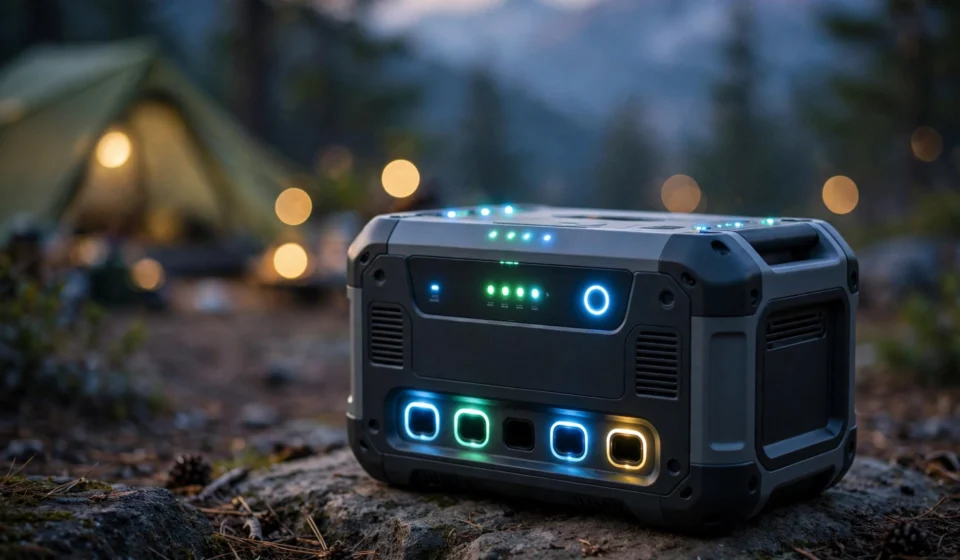

Finding the best portable power stations 2026 has to offer comes down to one simple idea: backup power should be quiet, portable, and ready before you need it. Whether you are dealing with load-shedding, planning a camping trip, or setting up a home office that cannot afford a dead laptop, a modern portable power station is the most practical answer. The latest 2026 models have matured into a serious product category, with LiFePO4 batteries that last for years, solar inputs that actually make sense, and outputs powerful enough to run a fridge.
In this roundup, we compare the strongest contenders across the categories that matter — overall value, camping, home backup, budget, and charging speed. We have also included a buying guide so you can match the right unit to your needs rather than just buying the biggest box.
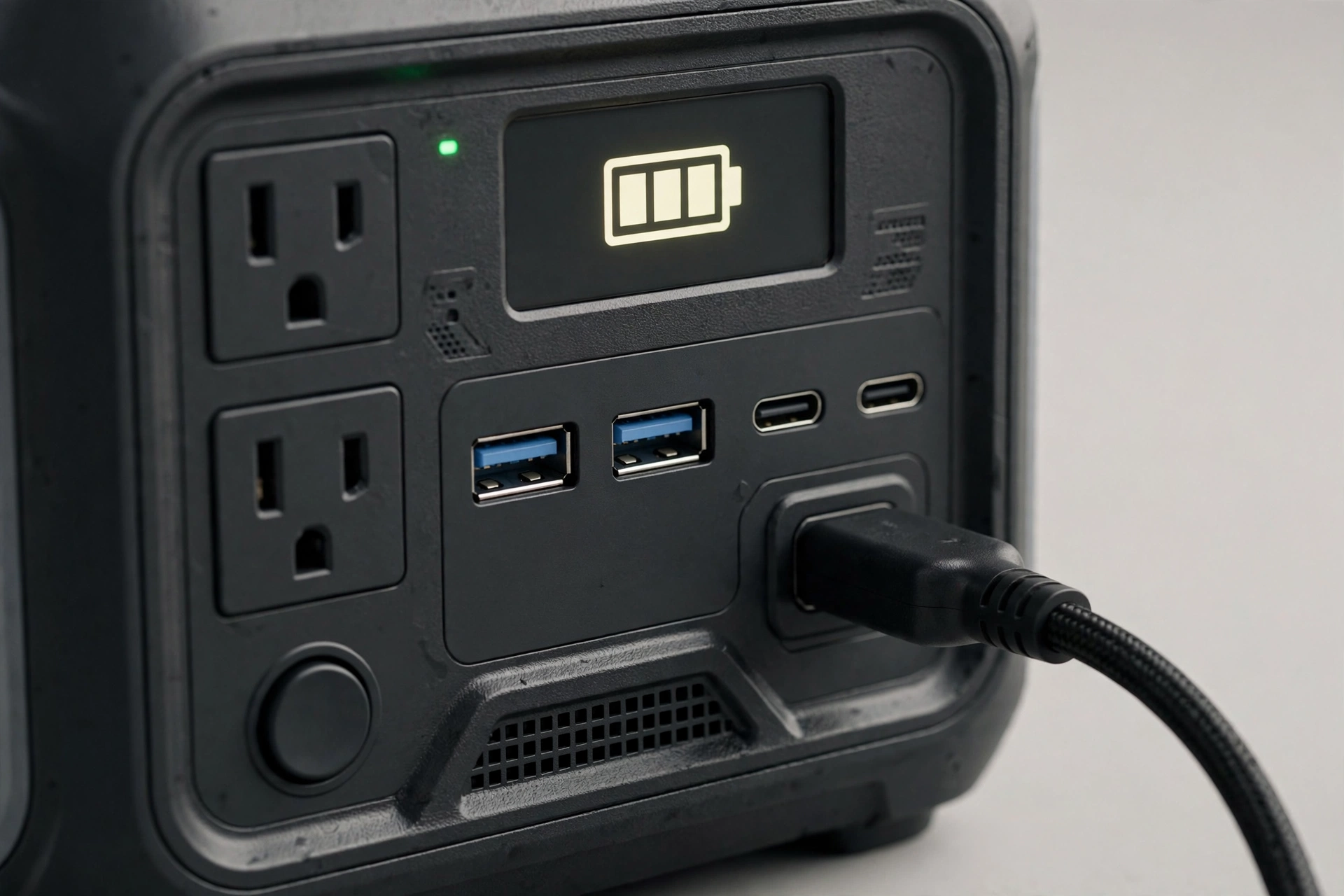
How to Choose Among the Best Portable Power Stations 2026
Before looking at specific models, it helps to understand the four numbers that define every power station: capacity, output, battery chemistry, and recharge time.
Capacity (Wh) vs. Output (W)
Capacity, measured in watt-hours (Wh), tells you how much energy the unit stores. Output, measured in watts (W), tells you how much power it can deliver at once. As a rule of thumb cited by reviewers, a 1,000Wh unit will run a typical fridge drawing around 100–150W for roughly 6 to 10 hours. Match capacity to your runtime needs first, then make sure output covers your hungriest appliance.
Battery Chemistry: LiFePO4 Is the Standard
Nearly every serious contender among the best portable power stations 2026 brings to market uses LiFePO4 (lithium iron phosphate) chemistry. Industry norms put these cells at roughly 4,000 or more charge cycles before capacity degrades meaningfully — several times the lifespan of older NMC packs. The leading brands back this up with warranties of 4 to 5 years, so a LiFePO4 unit bought today should still be going strong in the early 2030s.
Charging Speed and Inputs
Charging speed has become a real differentiator. Flagship models now refill in under an hour from a wall outlet, and solar inputs of 1,000W or more mean a few panels can keep a unit topped up off-grid. Look for multi-input charging (wall + solar simultaneously) if you plan to use the station daily.
Weight and Portability
Bigger capacity means heavier boxes. One reviewer notes the compact 1kWh-class units from Jackery and Anker weigh in the 23–25 lb range, light enough to carry with one hand. Once you cross into 2–3kWh home-backup territory, expect wheeled or two-person-carry designs. Pure sine wave AC output is standard on quality units and is what you want for sensitive electronics like laptops and CPAP machines.
Best Overall: Bluetti Elite 200 V2
The Bluetti Elite 200 V2 keeps showing up as the best overall pick in multiple 2026 roundups. It packs 2,073Wh of LiFePO4 storage — enough to run a fridge for a full day with headroom — and accepts up to 1,000W of solar input for genuinely useful off-grid refills. It sits in the sweet spot between portable 1kWh boxes and bulky home-backup monsters, making it the default recommendation among the best portable power stations 2026 reviewers keep circling back to.
Best for Camping: Jackery Explorer 1000 V2
For outdoor trips, weight matters more than raw capacity, and the Jackery Explorer 1000 V2 nails the balance. This lightweight 1kWh LiFePO4 unit weighs around 23.8 lbs and recharges in roughly an hour. One reviewer notes it can run a portable fridge for about 15 hours, covering a full weekend of cool drinks and charged phones. Its compact footprint fits easily in a car boot or tent vestibule, and paired with a 200W folding panel it becomes a self-sufficient camp kitchen.
Best for Home Backup: Jackery HomePower 3000
When the lights go out, you want capacity and the ability to run heavy loads. The Jackery HomePower 3000 sits in the roughly 3kWh class that reviewers recommend as the home-backup pick for 2026. That much storage covers a fridge, Wi-Fi router, lights, and phone charging through a multi-hour outage, and many units in this class support expansion batteries for longer blackouts. Look for models with UPS-grade switchover (under 20ms) if you need computers or medical devices to ride through the gap seamlessly.
Best for Off-Grid Living: Bluetti Apex 300
Full off-grid setups need modularity — the ability to stack capacity as your needs grow. The Bluetti Apex 300 earns the off-grid pick in 2026 roundups for exactly that reason. It is designed as the hub of an expandable system, so you can start with the base unit and add batteries over time instead of replacing the whole station. Strong solar input handling makes it a natural partner for rooftop or ground-mount panels, and Bluetti’s app gives detailed monitoring of what’s coming in and going out.
Best Fast Charging: EcoFlow Delta 3
The EcoFlow Delta 3 is the speed king of the best portable power stations 2026 lineup, reaching a full charge in around 56 minutes from a wall outlet. It also carries IP65 weather protection — rare and genuinely useful outdoors — and is expandable up to 5kWh when you need more runtime. EcoFlow’s add-on batteries and 4-to-5-year warranty coverage round out a hard-to-argue package.
Best Compact Workstation Backup: EcoFlow RIVER 2 Pro
Not everyone needs kilowatt-hours of storage. The EcoFlow RIVER 2 Pro, with 768Wh of capacity and 800W of output, is the home-office pick for keeping a desk alive through short outages. It recharges fully in about 70 minutes and weighs roughly 17.2 lbs, so it can live under a desk and travel when needed. For remote workers in areas with unreliable grids, it is the difference between losing a morning’s work and not noticing the power cut at all.
High-Capacity All-Rounder: EcoFlow Delta 3 Ultra and Bluetti AC200MAX
Two heavyweights deserve mention for buyers who want maximum headroom. The EcoFlow Delta 3 Ultra pairs 3,072Wh of storage with 3,600W of continuous output, suiting office and workstation backup as well as small home setups. The Bluetti AC200MAX offers 2,048Wh with 2,200W output (4,800W peak) and a proven expandable architecture. Both are LiFePO4-based with multi-year warranties.
Best All-Rounder on Specs: Anker SOLIX C1000 Gen 2
The Anker SOLIX C1000 Gen 2 reads like a checklist of everything buyers ask for: 1,024Wh of capacity, 2,000W of continuous output, about 49 minutes to recharge, and 10ms UPS-mode switchover — fast enough to keep a desktop PC alive. At roughly 24.9 lbs it stays genuinely portable, and Anker backs it with a 5-year warranty. If you want flagship features without stepping up to a 2kWh-plus unit, this is the one to beat.
Safety and Usage Tips
Portable power stations are safe when used sensibly. Operate and charge the unit in a ventilated area and keep it away from direct rain unless explicitly rated for it — the Delta 3’s IP65 rating is the exception. Do not exceed the rated output; a 2,500W heater on a 2,000W unit will trip protection circuits at best. For storage, most makers recommend keeping charge between 40 and 60 percent and topping up every few months. Finally, buy from the brand or an authorized retailer so the multi-year warranty actually covers you.
FAQs: Best Portable Power Stations 2026
What size portable power station do I need?
Add up the wattage of everything you want to run at once — that sets your output — then multiply by the hours of runtime you need for capacity in watt-hours. A fridge plus lights and phones for 8 hours lands around 1,000–1,500Wh; whole-home backup through long outages calls for 2–3kWh with expansion options.
How long do portable power stations last?
Modern LiFePO4 units are typically rated for about 4,000 or more charge cycles before capacity drops significantly, and leading brands offer 4-to-5-year warranties. With a few dozen cycles a year, the battery should outlast the warranty by a wide margin.
Can a portable power station run a refrigerator?
Yes. A typical fridge draws roughly 100–150W, so as a rule of thumb one reviewer cites, a 1,000Wh station runs it for about 6 to 10 hours. Larger 2–3kWh units cover a full day or more, and pure sine wave output — standard on quality units — keeps the compressor happy.
Are portable power stations safe indoors?
Unlike fuel generators, battery power stations produce no fumes and are safe to operate indoors. Keep them ventilated while charging, avoid covering them, and follow the manufacturer’s guidance on storage charge levels for the longest lifespan.
Can I charge a power station with solar panels?
Yes, and solar input is a headline feature of the best portable power stations 2026 models. Units like the Bluetti Elite 200 V2 accept up to 1,000W of solar, refilling a large unit in a few hours of good sun. Check the station’s solar voltage range before buying panels so the pair is compatible.
What is the difference between Wh and W on a power station?
Watt-hours (Wh) measure stored energy — how long the station can run things. Watts (W) measure instantaneous output — how powerful an appliance it can run at once. You need enough W for your biggest device and enough Wh for your runtime; both matter, and neither substitutes for the other.



[…] the right storage with the right kit makes all the difference, just as it does when choosing a portable power station for 2026 to keep everything charged in the […]
[…] which sips far less power. If you want parking mode without touching your car’s wiring, a portable power station or dedicated dash-cam battery pack can run the camera […]
[…] pockets and backpacks — whole campsites, home backup, or days off the grid — our guide to portable power stations for 2026 covers the bigger machines built for that […]