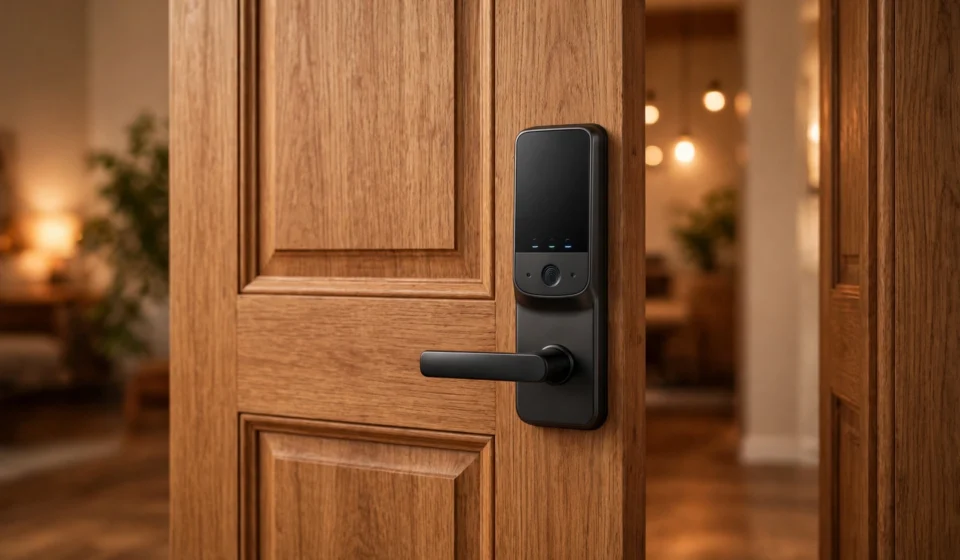

The best smart locks 2026 brings to the market are faster to unlock, easier to share with family and guests, and more tightly integrated with smart-home platforms than anything from just a couple of years ago. Whether you want to ditch keys entirely, give a dog walker a temporary code, or simply check from bed that the front door is locked, there is now a smart lock that fits your door, your phone, and your comfort level with DIY.
This guide rounds up the standout models for 2026, explains the key features worth paying for, and walks through the practical buying decisions — replacement versus retrofit, connectivity, and battery backup — so you can pick the right lock the first time.
Best Smart Locks 2026: Our Top Picks
After comparing the current generation of models against recent reviews and manufacturer documentation, these are the smart locks that stand out heading into 2026.
Best Overall Smart Lock 2026: Schlage Encode Plus
The Schlage Encode Plus remains the benchmark for buyers who want one lock that does almost everything. It is a full deadbolt replacement with a built-in keypad, built-in Wi-Fi (no separate hub needed), and support for Apple Home Key, which lets iPhone and Apple Watch owners unlock with a tap of the phone. Schlage rates its smart deadbolts to BHMA Grade 1, the highest residential security grade, which is a strong selling point for a lock that also happens to be a gadget. It runs on four AA batteries and still accepts a physical key as backup. According to Schlage’s official product information, Apple Home Key even works through Apple’s Power Reserve for a short time after the phone’s battery appears dead, so a dead phone does not mean a locked-out homeowner. Learn more on Schlage’s official site.
The trade-off is that it is a premium-priced lock with no fingerprint reader, and it requires a full deadbolt replacement, so it is not ideal for renters.
Best Versatile Smart Lock: Yale Assure Lock 2
The Yale Assure Lock 2 earns its spot through flexibility. It comes in modular configurations — touchscreen keypad, touch keypad, or keyless — so you can choose the entry method that suits your door. Yale’s reputation for touchscreen locks is strong, and the Assure Lock 2 integrates with major smart-home platforms including Apple Home, Google Home, and Alexa depending on the module. It is a full replacement deadbolt, and like most premium keypad locks it keeps a physical key or a 9V backup option so you are never stranded.
Best Value Smart Lock 2026: Aqara Smart Lock U200
The Aqara Smart Lock U200 is the pick for buyers who want modern standards at a reasonable price. It supports the Matter smart-home standard and Apple Home Key, communicates over Thread and Bluetooth for reliable local control, and offers multiple entry methods including fingerprint, PIN, NFC, and app control. Because it is a retrofit lock, it preserves your existing exterior deadbolt and keys — a genuinely renter-friendly approach.
Best Fingerprint Smart Lock: ULTRALOQ U-Bolt Pro WiFi
If fingerprint entry matters most, the ULTRALOQ U-Bolt Pro WiFi is the one to beat. Its fingerprint reader is designed to recognize prints from any angle, and it stacks PIN codes, app control, voice-assistant support, and a physical key backup on top. Built-in Wi-Fi means remote access without an extra bridge.
Best Retrofit Smart Lock: August Wi-Fi Smart Lock
The August Wi-Fi Smart Lock installs on the inside of your existing deadbolt, so the exterior of your door — and your landlord’s original keys — stay untouched. Entry happens through the app, auto-unlock as you approach, or a paired keypad. It works with Alexa, Google Home, and Apple HomeKit. The compromise is shorter battery life than Bluetooth-only locks and a bulky interior unit, but for renters and anyone who does not want to touch the existing hardware, it is the most practical non-invasive upgrade.
Best Smart Locks 2026: Replacement vs Retrofit
One of the first decisions when shopping for the best smart locks 2026 offers is whether to replace the whole deadbolt or retrofit what you already have.
Full replacement locks (Schlage Encode Plus, Yale Assure Lock 2, ULTRALOQ U-Bolt Pro) swap out the entire deadbolt. They tend to have stronger physical-security ratings, cleaner exterior designs, and built-in keypads. The downside: you need basic tools and about half an hour, and they are usually a non-starter for rental properties.
Retrofit locks (August Wi-Fi, Aqara U200, Nuki Smart Lock Ultra) bolt onto the interior side of your existing deadbolt. Installation takes minutes with no drilling, your original keys keep working from outside, and the door looks unchanged. The interior unit is typically bulkier, and you are relying on the security of the deadbolt already in place.
If you own your home and the door hardware is standard, a full replacement is usually the better long-term choice. If you rent, live in an apartment, or love your existing exterior hardware, go retrofit.
What to Look for in a Smart Lock
Connectivity and smart-home standards
The biggest behind-the-scenes shift in recent years is the arrival of Matter, the universal smart-home standard backed by Apple, Google, Amazon, and Samsung. Locks like the Aqara U200 and Nuki Smart Lock Ultra support Matter over Thread, which means they communicate directly with your smart-home network instead of depending on one manufacturer’s app or cloud service. Wi-Fi locks (Schlage Encode Plus, ULTRALOQ U-Bolt Pro WiFi) connect directly to your home network for remote access; Bluetooth-only locks need your phone nearby or a separate hub for remote features.
Entry methods
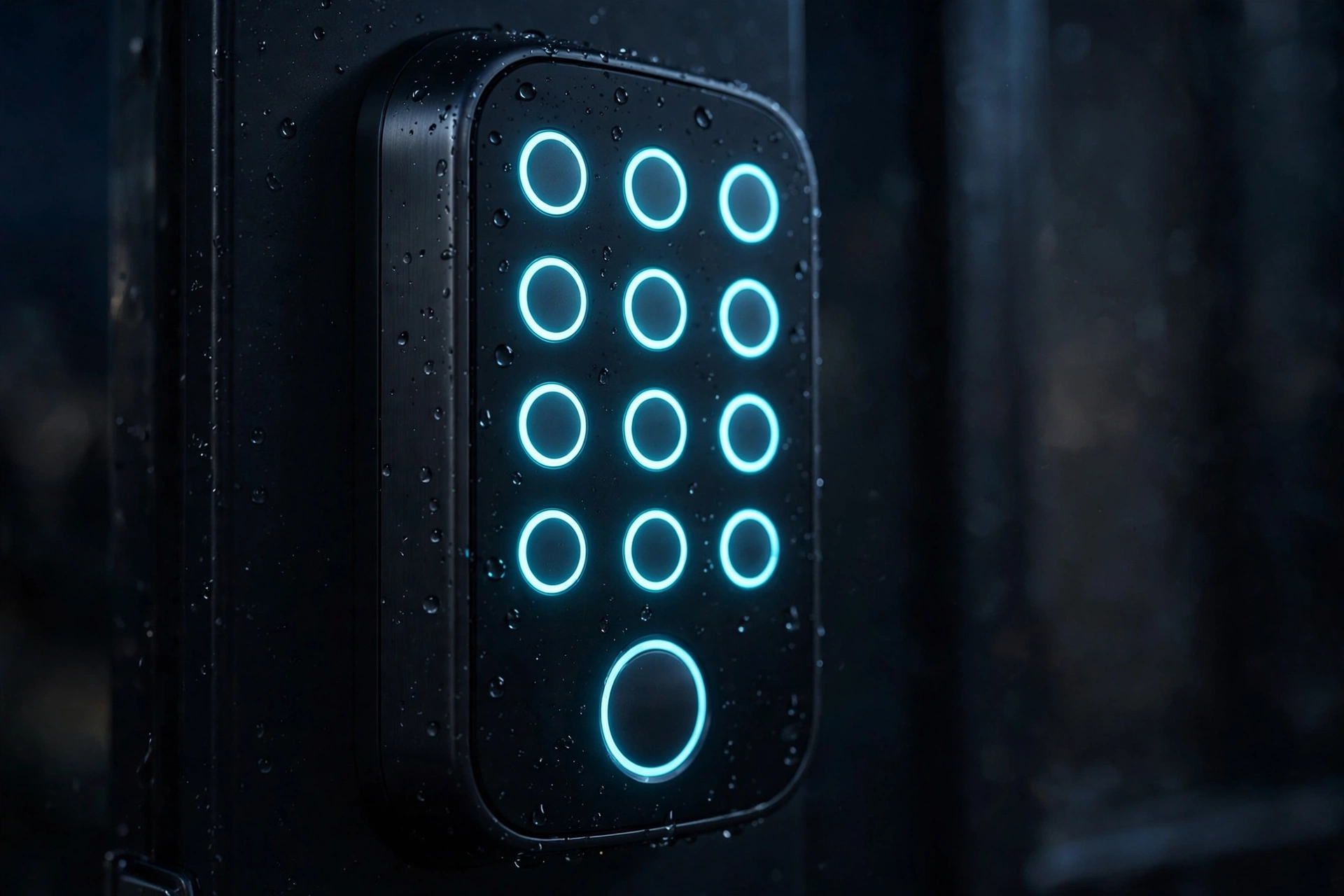
More options are better. A good 2026 lock should offer at least two of: PIN keypad, fingerprint, smartphone app, and a physical key. Apple Home Key support is a meaningful bonus for iPhone households — it turns your phone into a key card that works even with a dying battery.
Battery life and backup power
Most smart locks run on AA or AAA batteries that last several months to a year depending on usage and connectivity. Every lock worth buying warns you well in advance of low battery, and the best ones keep a physical key or a 9V emergency terminal as a failsafe. Retrofit locks are inherently safer here: the original key always works from outside, battery or no battery.
Guest access and scheduling
Temporary PIN codes are the killer feature of smart locks. Dog walkers, cleaners, and Airbnb guests each get their own code — set to expire automatically — instead of a shared spare key. Some brands, including Yale and Schlage, integrate with property-management platforms for automatic guest-code generation, which is worth knowing if you rent out a property. For more on protecting the rest of your home, see our guide to the best home security cameras 2026.
Are Smart Locks Safe?
This is the question every buyer asks, and the honest answer is that modern smart locks are secure in ways that matter and imperfect in ways worth knowing. Digital communication on current locks uses AES 128-bit or 256-bit encryption — the same standard used in banking — which makes remote hacking of the radio link extremely difficult in practice. On the physical side, retrofit locks keep your existing deadbolt mechanism untouched, so nothing about the door’s physical resistance changes. Full-replacement locks from established lock brands carry ANSI/BHMA grades, with Grade 1 being the strongest residential rating.
No lock is immune to every attack, digital or physical. But against the realistic threats — lockpicking, bumping, lost keys, and an ex-tenant with a copied key — a quality 2026 smart lock with encrypted communication, unique guest codes, and an access log is meaningfully harder to defeat than a standard keyed deadbolt.
FAQ: Best Smart Locks 2026
Can smart locks be hacked?
No consumer technology is unhackable, but current smart locks use AES 128-bit or 256-bit encryption for wireless communication, which is the same encryption standard used in online banking. Reviewers and security researchers generally consider the digital side of modern smart locks far harder to attack than the physical side of a basic keyed deadbolt.
Do smart locks work without Wi-Fi?
Yes. Most smart locks communicate with your phone over Bluetooth locally, so unlocking at the door works even if your internet is down. Locks with Matter over Thread support communicate locally through your Thread network too. Without Wi-Fi you lose remote access — checking or controlling the lock from away from home — but the lock itself keeps working normally.
What happens if the battery dies on a smart lock?
Retrofit locks preserve your physical key as backup, so a dead battery never locks you out. Full-replacement locks typically include a 9V battery terminal on the exterior that gives you enough power to enter your code, and most locks send low-battery warnings weeks before they actually die. Schlage’s Apple Home Key support works through Apple’s Power Reserve for a short period after the phone battery runs out.
Are smart locks good for rentals and apartments?
Yes — choose a retrofit lock such as the August Wi-Fi Smart Lock or Aqara U200. These install on the interior side of the existing deadbolt with no drilling and no exterior changes, so your landlord’s original keys continue to work and the door looks identical from outside.
Do smart locks work with Alexa, Google Home, and Apple HomeKit?
Most 2026 models support at least one major platform, and several support all three. Matter-compatible locks are the most future-proof because they work across ecosystems. If you are invested in Apple’s ecosystem, look specifically for Apple Home Key support, currently offered by locks such as the Schlage Encode Plus and Aqara U200.
Which is better: fingerprint or keypad entry?
It depends on who uses the door. Fingerprints are fastest and cannot be forgotten, but they can struggle with wet or worn fingers. Keypads work for everyone, including guests and children, and temporary guest codes are a keypad’s biggest advantage. The safest choice is a lock that offers both, such as the ULTRALOQ U-Bolt Pro WiFi or the Aqara U200.